The Close-Up That Makes the Frontier Feel Small
See how a Western close-up turns a withheld glance, tightened jaw or delayed answer into tension, and learn to read the choices that make a face command the scene.
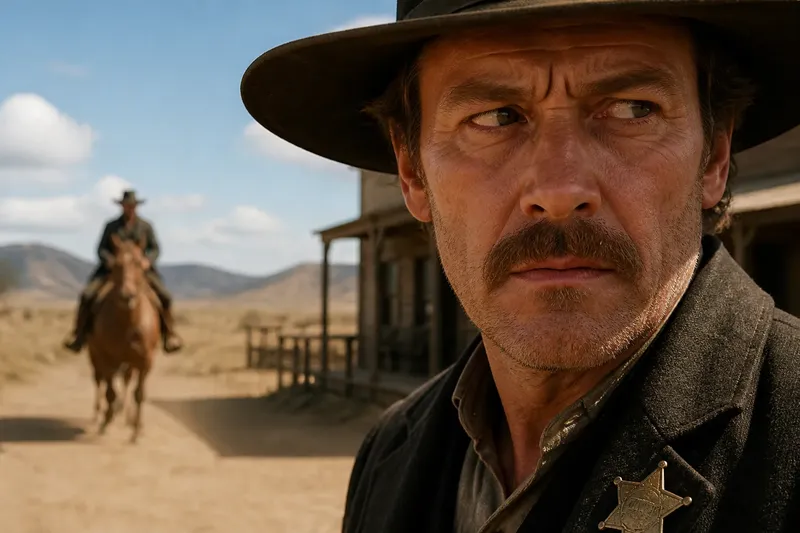
A rider stops at the edge of a dry creek, but the Western’s most uneasy image may be the sheriff’s face as he hears the horse arrive. The close-up makes the frontier feel small: open country gives way to a held breath, a glance that slips aside, or an answer that comes a moment too late.
That shift does not mean the landscape has stopped mattering. It means the scene’s immediate question has moved from where a character stands to what that character is trying not to show. Watch the face closely and the open space becomes pressure around it.
From distance to face
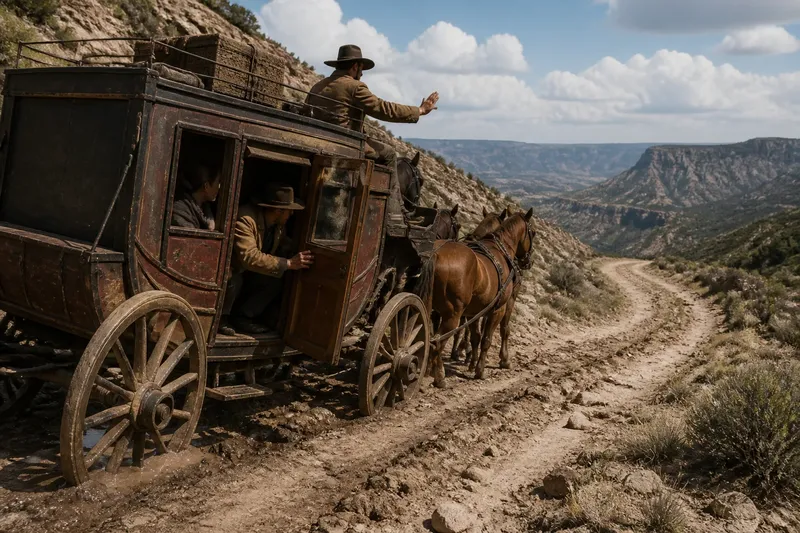
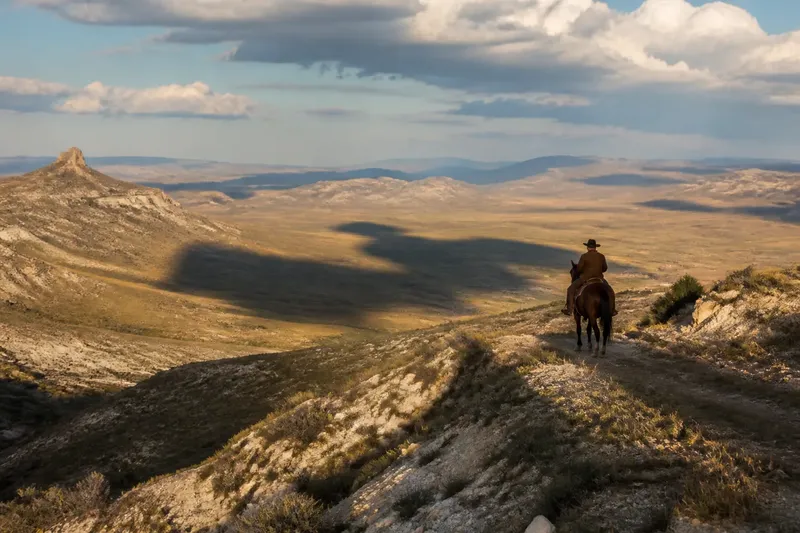
A wide shot can establish the practical problem: a lone rider approaches, a town waits, or a family stands exposed on a road. It gives the audience room to understand distance and movement. A close-up changes the scale of attention, often arriving when the action itself has become simple but its meaning remains uncertain.
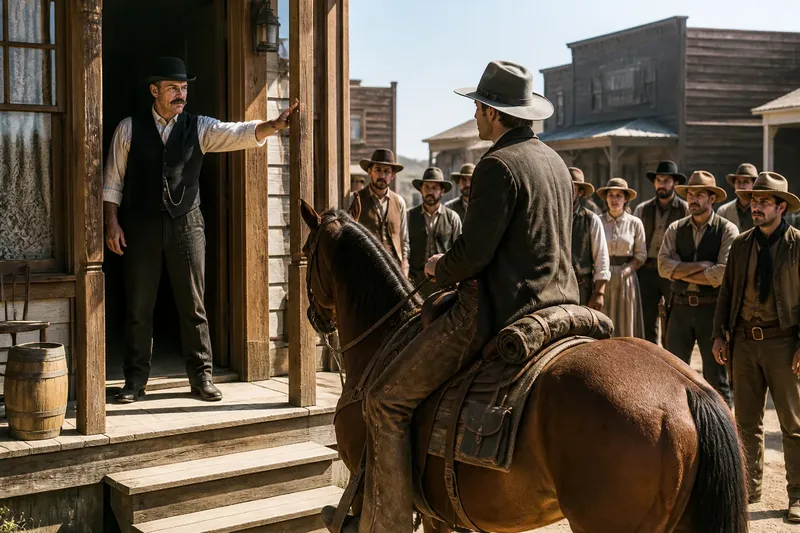
Suppose two people sit across a table and one asks whether the other saw the stranger leave. The room may be plain, the answer easy to speak. A close-up can make the delay before the reply feel like the scene’s real action. The question is no longer only what happened outside, but why the listener cannot answer at once.
In a Western, this contrast can sharpen the genre’s familiar image of openness. The character may have miles of country behind them, yet the frame offers no escape from a small movement in the eyes. The landscape supplies the situation; the face supplies the suspense.
Signals of withholding
A withheld reaction is not always a dramatic grimace. More often, the actor gives less than the audience expects: a glance held on the table, a mouth that opens and closes, a blink that arrives after the other person has looked away. The close-up gives those modest choices room to register without explaining them.
Pay attention to when the face changes, not just how. A jaw might tighten after a name is spoken rather than during the question. That small delay invites the audience to connect the name with a private memory, suspicion or fear, while leaving the exact cause unsettled.
Stillness can carry several meanings at once. A character who does not react may be controlling anger, calculating a lie, or refusing to give an opponent a readable answer. The shot does not settle the question; it makes the uncertainty visible.
Timing and the cut
The close-up’s force depends partly on its entrance. If a film cuts to a face before the audience has seen what prompted the reaction, the image can create a question. If it cuts after a threat or confession, the same framing can show what the character chooses to conceal.
Then notice how long the shot stays. A quick cut may register recognition and move on. A longer hold asks the viewer to inspect the face, but it can also make the character’s refusal to respond feel deliberate. The useful distinction is not simply short versus long; it is whether the shot gives the reaction time to alter the scene.
Sound can make that hold more charged. A creaking chair, a boot shifting on boards or a horse moving outside may continue while the face remains still. Those sounds keep the setting present without competing for the frame, so the audience senses the world pressing in around the character’s silence.
Framing the face
Not every close-up gives equal access. A face turned towards the camera may seem open, while a profile or a face partly hidden by a hat brim can keep the eyes difficult to read. The brim is not merely costume detail: depending on the light and angle, it can preserve a pocket of uncertainty.
Composition matters too. A face placed near the frame’s edge can seem crowded by the space around it, while a centred face may feel composed and difficult to dislodge. Neither arrangement has one fixed meaning. Its effect comes from the scene’s other choices: who is looking, what has just been said, and whether the character has room to turn away.
Focus can direct attention without making the background vanish completely. A blurred doorway behind a character may still remind the viewer where an absent person could appear. The close-up narrows what can be read, while a trace of the setting keeps the unanswered threat connected to the larger scene.
Reading the close-up?
Why cut to a face after a question?
The question gives the reaction a clear cause, so the audience can watch for acceptance, evasion or surprise. A pause may carry more weight than an immediate reply because the character appears to choose what the other person is allowed to see.
What does a held close-up suggest?
A held shot can make silence feel active, especially when another character is waiting. It does not prove what the silent person thinks; it makes the audience weigh visible behaviour against the missing answer.
Can a close-up keep the landscape present?
Yes. Wind, distant hoofbeats, a doorway or a sliver of horizon can keep the frontier in the scene even when the face fills most of the frame. These details remind us that the character’s private reaction is unfolding in a place with consequences.
When does a close-up feel overemphatic?
It can feel overemphatic when the expression merely repeats information already made plain by dialogue or action. A close-up is more engaging when it adds a complication, such as a mismatch between the character’s calm words and an involuntary glance.
A scene in miniature
Imagine a fictional Western scene in which a storekeeper tells a deputy that nobody entered after dark. The deputy notices a fresh smear of dust on the storekeeper’s cuff, but instead of pointing it out, he asks about the weather. The film cuts close as the storekeeper glances at the cuff and then answers too quickly that the night was still.
The cuff gives the audience a concrete reason to question the answer; the close-up supplies the storekeeper’s visible hesitation. A quiet scrape from the street can keep the town nearby, but the scene’s tension now rests on whether the deputy has noticed the same detail and whether the storekeeper knows it.
That effect would weaken if the shot spelled out every thought with a broad expression. A flick of the eyes and a rushed reply leave room for several readings. The audience becomes alert not because the scene has revealed everything, but because it has made one small inconsistency difficult to ignore.
What is not worth forcing
It is not worth treating every face as a puzzle or every pause as a hidden confession. Some close-ups simply let a character register grief, relief or resolve plainly. If the scene has already made the feeling clear, inventing an elaborate secret can distract from the performance rather than deepen it.
Nor does a close-up automatically make a Western intimate or tense. Its effect depends on what precedes it, what the character can see, and what the film withholds from the audience. The frame may narrow, but the scene’s meaning still comes from the relation between face, action and place.
Follow the attention
When a Western close-up replaces landscape as the scene’s main source of tension, ask what the film has made you stop watching. Perhaps the rider has reached town, the door has closed, or the argument has ended; now a character’s delayed look carries the unanswered part. The face feels compelling because the wider world has not disappeared, but because its dangers have gathered around one reaction.
On a rewatch, follow the cut into the close-up and the first detail that changes within it. That detail may be a blink, a glance towards the edge of the frame, or the sound that interrupts the silence. It offers a practical way to see how a small, withheld response can make even the widest frontier feel suddenly close.