Stagecoach or Saddle: Two Ways a Western Moves Its Characters
Stagecoach or saddle changes who controls a Western journey: use this story comparison to shape shared decisions, confined space and a lone rider’s freedom.
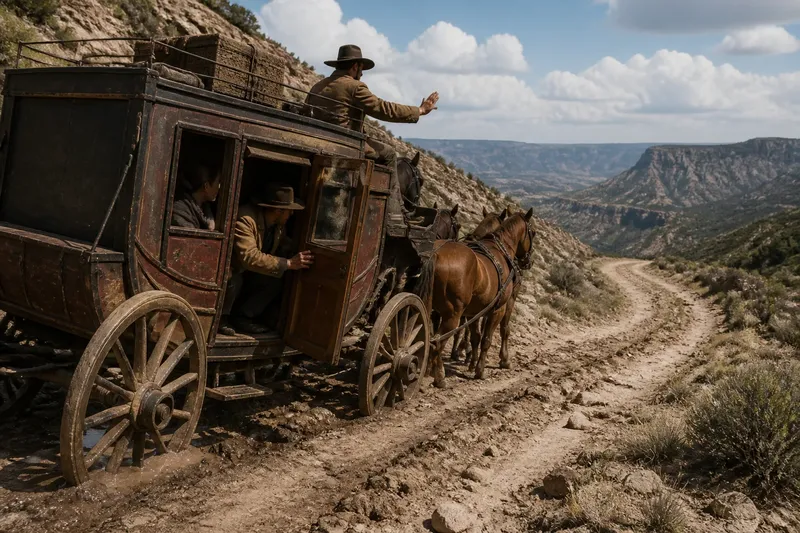
A coach wheel catches in a rut just as the trail bends out of sight. Inside, a passenger reaches for the door; the driver tells everyone to stay put. A Western built around a stagecoach has already made its central question visible: who gets to decide what happens next? Put a lone rider on that trail, and the question changes. There is no crowded interior to negotiate, but every choice belongs to the person in the saddle.
Stagecoach or saddle is more than a choice of transport. It gives a story a different arrangement of power, privacy and responsibility. To see how, follow one invented situation from its first delay to its ending, then consider what each version lets the characters do.
The journey’s pressure
Imagine a fictional Western in which a traveller carries a sealed letter to a settlement beyond a dry stretch of trail. The message concerns a family dispute, not a public emergency. At a fork, rain has softened the lower road, while the higher track is narrow and exposed. The traveller must choose whether to continue, wait or seek another route.
In the stagecoach version, the traveller is one of several people with reasons to reach the settlement. The driver knows the team and the road; a passenger may know the destination; another may have a reason to avoid it. Their aims overlap just enough to make disagreement useful. The letter’s owner cannot simply command the journey without giving the other passengers a reason to cooperate.
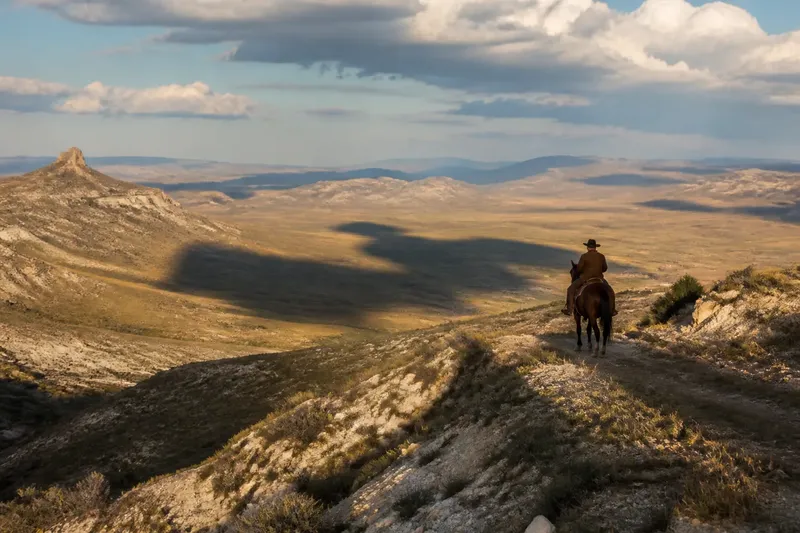
In the saddle version, the same traveller rides alone. The choice is immediate and private: the rider can take the higher track, stop to read the letter or turn back. That freedom creates a different burden. With nobody to argue against, delay or compromise with, the character has fewer ways to shift responsibility for a decision.
Decisions in company
A coach makes decisions social before they become physical. Someone proposes the upper track; someone else points out that the team is tired. The driver can reject both suggestions, but that authority has a cost: passengers may lose trust, refuse to help or demand a different plan. Even a small choice can reveal who is accustomed to being heard.
The coach also gives the writer a natural reason to keep people together after an argument. They share a vehicle, a destination and the consequences of the route. A passenger who dislikes the letter’s owner may still need that person to hold a lantern or calm a frightened horse. Cooperation can be practical without becoming friendship.
Say the fictional traveller in the coach wants to press on, while another passenger asks for a pause. The driver proposes waiting until the rain eases, and the traveller reluctantly agrees after learning that the team is pulling unevenly. The observable result is a changed relationship: the traveller has accepted another person’s knowledge, while the driver has earned room to lead. The pause need not settle their deeper disagreement; it simply makes the next decision more complicated.
For a screenwriter, the useful question is not how many passengers can fit in the coach. It is what each person can contribute that the others cannot. One knows the route, one controls the horses, another holds the information that gives the journey meaning. If a character has no influence on any decision, they may be decoration rather than part of the story’s pressure.
Space that argues
The coach’s interior turns proximity into story material. A character can overhear a conversation, guard a parcel from a neighbouring hand or avoid looking at someone across a narrow bench. The driver’s seat and the passenger compartment also separate forms of knowledge: the driver sees the road, while those inside may know why the destination matters.
That division can make the coach feel like a small moving community without implying that its occupants agree. A pause at a roadside stop offers a temporary release from the cramped interior, but it does not erase the shared journey. When they climb back in, the same seating arrangement may carry a new tension: who sits beside whom, who keeps the door clear, and who is trusted with the letter?
A lone rider has no comparable cabin to organise. The horse is a companion and a responsibility, but not a source of human counterargument. The rider can speak aloud, conceal a decision or change direction without seeking consent. Silence therefore belongs to the rider, while in a coach silence is something passengers experience together and may interpret differently.
It is not worth adding passengers simply to create a crowd of quarrels. A smaller group with distinct knowledge and competing needs gives each exchange a consequence. The same goes for repeated arguments about the route: one sharp disagreement can establish the power arrangement more clearly than several scenes that make no new demand.
What changes on horseback?
If the traveller rides alone, the road becomes a test of personal judgement rather than collective consent. The character may be brave, stubborn or simply uncertain; the form does not dictate the trait. What it does remove is the easy option of asking the group to decide. A rider can still seek help at a ranch or settlement, but that encounter is a choice to enter another social arrangement, not an unavoidable feature of the journey.
The horse also makes the character’s choices legible through care. A rider who presses on despite the animal’s reluctance reveals a priority; one who stops to tend it accepts a delay. These moments can carry meaning without turning the landscape into a speech or the horse into a human substitute.
Now imagine the same fictional traveller receives the letter alone. At the fork, the rider takes the higher route, then stops when the horse balks at a loose section of trail. The traveller chooses to wait and later reaches the settlement without another person’s agreement or objection. The result is not proof that solitary travel is better; it is a story in which the character owns the cost of the choice more directly.
A lone rider can still be changed by other people, but the story must arrange those encounters deliberately. A brief exchange with a ranch hand might challenge the rider’s account of the dispute. A visit to a settlement can make the rider answer for a decision that was made in private. The journey stays solitary only until the character chooses to let someone else into it.
Choosing the right form
Choose the coach when the story depends on negotiation: who has authority, who possesses useful knowledge, and who must live with a decision made by someone else. Choose the lone rider when its centre is a character’s discretion, isolation or obligation to act without permission. Neither form is inherently more dramatic. Each creates a different kind of pressure, so the choice should follow the conflict rather than serve as scenery.
Before drafting, ask what the journey needs to make visible. If the traveller’s moral change depends on listening, a coach can make that listening unavoidable. If the change depends on taking responsibility in private, the saddle may give the character room to do it.
Questions about Western journeys?
Why put a group in a stagecoach?
A stagecoach brings people with different interests into the same moving space, so decisions about route, timing and authority affect everyone. It suits stories where cooperation is necessary but trust is unsettled.
What does a lone rider add?
A lone rider makes choice more private and responsibility harder to share. The story can focus on the character’s judgement, while later encounters show what that private decision means to others.
Can a coach story still focus on one hero?
Yes: keep one character’s goal at the centre, but let passengers and driver alter the choices available to them. Their influence can sharpen the hero’s conflict without taking over the story.
Does a rider need to travel entirely alone?
No. A rider can meet other people along the trail or choose to join them for part of the journey. The important distinction is whether company is built into the route or entered by the character’s own decision.
When weighing stagecoach or saddle for a Western story, begin with the decision that matters most. Ask who must share it, who can refuse, and who will carry its consequence once the road opens again. The right vehicle is the one that makes those answers visible in the way your characters move.